







When a building collapses, the first questions are usually obvious: How many people were affected? What caused the collapse? Could it have been prevented?
When fire destroys a shop, attention quickly turns to the damage. When a road accident occurs, reporters focus on the victims, the vehicles involved and the circumstances surrounding the crash.
- Advertisement -

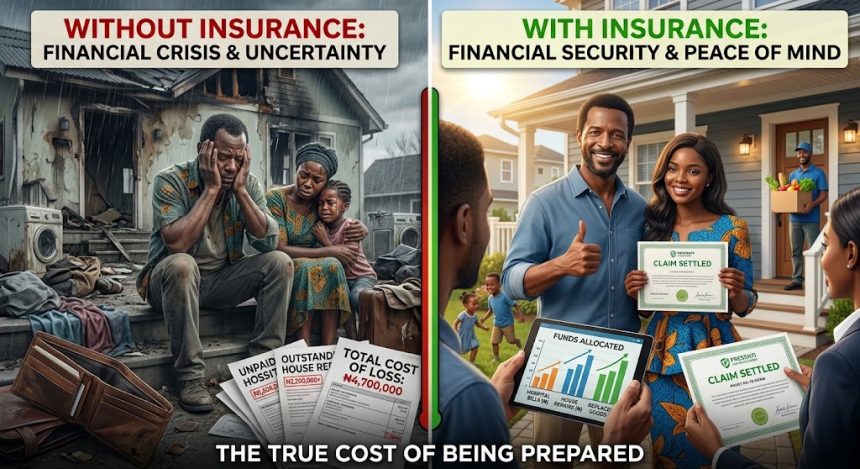
But there is another question that rarely makes it into the story: Who will pay for the loss?
For insurance professionals and media experts, that missing question represents one of the biggest gaps in Nigeria’s reporting of disasters and major incidents.
They believe journalists can play a much bigger role in changing how Nigerians understand insurance, particularly at a time when the sector is undergoing significant reforms under the Nigerian Insurance Industry Reform Act 2025.
The argument was at the centre of a two-day media seminar in Lagos organised by Insurance Publication Limited and sponsored by the Africa Re Foundation and Africa Reinsurance Corporation.
The seminar, themed “The Universe of Insurance and Journalism: Risk Everywhere, in Everything,” brought together journalists, academics, insurance professionals and healthcare experts to examine how the media can help Nigerians understand the risks they face and the financial protection available to them.
For Professor Adepoju Tejumaiye of the Department of Mass Communication, University of Lagos, the journalist’s job should not end when the immediate drama of an incident is over.

He challenged reporters to become “risk interpreters” who help audiences understand not only what happened, but also the financial consequences that follow.
If a factory burns down, for instance, the story could go beyond the cause of the fire and the value of the property destroyed. A journalist could ask whether the factory was insured, what type of cover it had, whether a claim could be made and who would ultimately bear the cost if there was no insurance.
- Advertisement -

The same questions, he argued, should apply to collapsed buildings, road crashes, business failures and other incidents that leave individuals and organisations counting their losses.
Behind the call is a problem that has persisted for years: many Nigerians remain unfamiliar with insurance, while some who understand it remain sceptical about its value.
Tejumaiye pointed to low public awareness, mistrust of insurers, complicated insurance language, poor claims experiences and weak enforcement of compulsory insurance requirements as some of the factors limiting the growth of the sector.
The result is a cycle in which insurance is often remembered after disaster rather than before it.
Dr Femi Oyetunji, Chairman of the Board of Directors of SanlamAllianz Life Insurance Nigeria Ltd, described the insurance gap as more than an industry problem, arguing that it affects Nigeria’s ability to withstand economic shocks.

He said the Nigerian Insurance Industry Reform Act 2025 provides an opportunity to strengthen regulation, compulsory insurance, policyholder protection and digitalisation.
But legislation alone, he noted, will not be enough.
For reforms to have the desired impact, Oyetunji said insurers must provide products people can access, settle valid claims promptly and comply with regulatory requirements.
In other words, public confidence cannot be built by regulation alone. Nigerians also need to see insurance work when they need it most.
That confidence challenge is one reason technology featured prominently during the seminar.
Jackson Ikiebe, a Certified Chief Artificial Intelligence Officer, said artificial intelligence and blockchain could make insurance more accessible through digital distribution, automated claims processing, digital onboarding and pay-as-you-go products.
Yet he cautioned that technology should not be mistaken for a magic solution.
Low awareness, concerns about digital trust, regulatory standards and the difficulty of integrating emerging technologies with existing insurance systems remain challenges that must be addressed.
For Raymond Akalonu, Managing Director and Chief Executive Officer of Umbrella Insurance Brokers Ltd, the bigger issue is Nigeria’s long-standing dependence on what he described as a “relief culture.”
When disaster strikes, government intervention often becomes the immediate answer. But while such assistance may provide temporary relief, he argued that it can also leave the financial burden on public funds.
Akalonu wants journalists to follow the money.
Was the damaged public building insured? Was the business covered? What happened when the owner submitted a claim? If there was no insurance, who eventually paid for the loss?
Those questions, he argued, could transform the way Nigerians think about risk.
They could also expose gaps in compliance.
Senior Advocate of Nigeria, Dr Omogbai Omo Eboh, said government should lead by example by ensuring that public assets, infrastructure and employees are adequately insured.
He also proposed linking compliance with compulsory insurance requirements to licences, permits, registration and public procurement, while advocating technology-driven systems for verifying insurance policies and reducing fraud.
But the seminar was not only about insurance.
Healthcare was also placed under the spotlight, with Dr Augustine Aipoh, Medical Director of Olive Medicare Hospital, Lagos, urging journalists to look beyond reporting healthcare events and examine whether government policies are delivering the intended results.
He called on reporters to explain healthcare policies to the public, monitor their implementation, investigate their effects on patients and verify medical claims before publication.
For Ifeanyi Ugwuadu, Project Convener of Insurance Publication Limited, the central message is simple: insurance should not be left to specialist reporters.
Risk cuts across almost every part of Nigerian life.
It is present on the roads, at construction sites, in hospitals, farms, factories, banks, markets and small businesses.
READ ALSO: Abeokuta 10km Race Offers $1,000 Top Prize As Over 3,000 Runners Prepare For Showdown
That means virtually every major news story can also contain an insurance story.
A fire is not only a fire. It can be a question about financial protection.
A collapsed building is not only a structural failure. It can raise questions about liability, compliance and insurance.
A business closure is not only an economic story. It can also reveal how prepared the business was for unexpected losses.
The challenge, therefore, is not simply to report disasters but to help audiences understand what happens after the cameras leave and the headlines disappear.
That is where the media’s role becomes particularly important.
As Nigeria moves to implement the NIIRA 2025 reforms, the success of the insurance sector may depend not only on regulators and insurers, but also on whether Nigerians understand what insurance means, what it covers and what they can demand when disaster strikes.
And perhaps the next time a building collapses, a factory burns or an accident leaves a family counting its losses, the first question should not end with “What happened?”
It should also be: “Who bears the cost?”


