




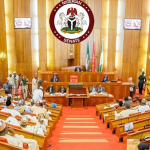





President Bola Tinubu has received the Constitution (Sixth Alteration) Bill providing for the establishment of state police, with plans to review the legislation ahead of a formal signing ceremony.
- Advertisement -

Chief of Staff to the President, Femi Gbajabiamila, disclosed this on Wednesday, saying the bill was transmitted to Tinubu by his Special Advisers on Senate and House of Representatives Matters, Senator Basheer Lado and Wasiu Olanrewaju-Smart.
Gbajabiamila said the President would examine the constitutional amendment in consultation with the Attorney-General of the Federation, Lateef Fagbemi, before assenting to it at a formal ceremony.
He also disclosed that the Presidential Working Group on State Police, which he chairs, had concluded extensive stakeholder engagements and nationwide consultations towards developing a draft National Policing Bill. The proposed legislation is intended to provide the operational framework for subnational policing.

According to him, the draft bill has been submitted to the Federal Ministry of Justice for legislative drafting validation. Once the validated version is returned, the working group will review it and present it, alongside its report, to the President for consideration.
The development follows the Senate’s directive to the Clerk of the National Assembly, Kamoru Ogunlana, to transmit the constitutional amendment to Tinubu after all 36 state Houses of Assembly approved it. The approvals exceeded the minimum requirement of 24 state assemblies under Section 9(2) of the 1999 Constitution.
The Senate had also urged the executive to forward the separate National Policing Bill to the National Assembly for scrutiny and expeditious passage. The proposed decentralisation of policing has attracted support as a way to improve local intelligence and security responses, alongside concerns about political interference, accountability, funding and possible conflicts between security agencies.
Human rights lawyer Femi Falana has supported decentralised policing but stressed the need for clear jurisdictions and legal safeguards, while warning that state police alone would not resolve insecurity without addressing underlying socio-economic challenges.