








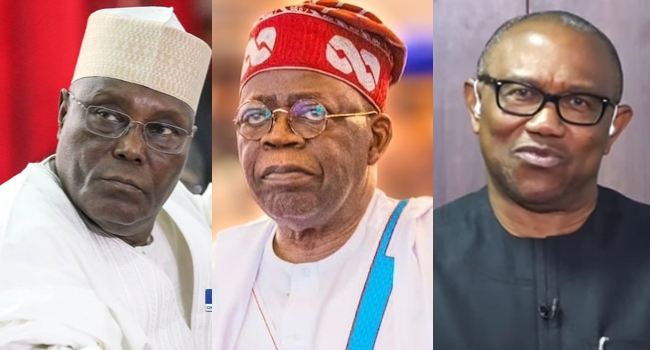
Nigeria’s economic reform programme is emerging as a major point of contention ahead of the 2027 general elections, with the ruling All Progressives Congress (APC) defending President Bola Tinubu’s policies while opposition figures Atiku Abubakar and Peter Obi advocate alternative approaches to addressing the country’s economic difficulties.
- Advertisement -

The APC maintains that the removal of petrol subsidy and unification of the foreign-exchange market were necessary to address longstanding fiscal and structural weaknesses. Although the measures have imposed significant costs on households and businesses, the party argues that abandoning them would risk returning Nigeria to an unsustainable economic model. It is instead calling for policy continuity, improved implementation and measures to ensure that the benefits reach ordinary Nigerians.
The party’s position has received support from some economic assessments. Centre for the Promotion of Private Enterprise Chief Executive Officer, Dr Muda Yusuf, identified improved investor confidence and macroeconomic stability among the gains of the reforms, urging the government to sustain the programme. Senator Gbenga Kaka also pointed to signs of foreign-exchange stabilisation.
The World Bank, in its October 2024 Nigeria Development Update, described the reforms as difficult but necessary, while the International Monetary Fund’s June 2026 Article IV assessment said reforms introduced since 2023 had strengthened macroeconomic stability, reduced fiscal vulnerabilities and rebuilt external buffers.
Tinubu has also repeatedly defended the policy direction. Receiving a World Bank delegation led by its Managing Director of Operations, Anna Bjerde, at the State House on February 3, 2026, he said the administration would not abandon its reform programme despite the hardship involved. Bjerde, in turn, described Nigeria as an example of “steady, credible reform leadership”, pointing to policy consistency as a factor supporting investor confidence.
However, the administration faces pressure to demonstrate that macroeconomic improvements are translating into lower living costs, better jobs and improved public services.
Atiku, the presidential candidate of the African Democratic Congress (ADC), has proposed renewed government intervention in the petroleum sector, including a production-linked subsidy for locally refined products. Under his proposal, preferential crude supply to domestic refineries would help reduce production costs and, consequently, pump prices.
The former vice-president argues that lower energy costs would ease transportation and business expenses. However, the proposal raises questions about how the intervention would be funded, monitored and sustained without recreating the fiscal leakages associated with the former subsidy regime. His current position also marks a departure from his support for subsidy removal during the 2023 presidential campaign.
Peter Obi, the Nigeria Democratic Congress (NDC) presidential candidate, has taken a different position on some aspects of the reform programme. He has indicated that he would retain the floating exchange-rate system while placing greater emphasis on domestic production, investment, prudent public spending and human capital development.
- Advertisement -

Obi has also advocated transparency in the management of petroleum resources and proposed a more accountable approach to fuel-market intervention. His position raises a central policy question: whether a monitored subsidy arrangement can provide relief without imposing unsustainable costs on public finances or diverting funds from infrastructure, healthcare, education and productive investment.
For the APC, the next phase should focus on consolidating the deregulated petroleum market, encouraging domestic refining and directing public resources towards targeted support for vulnerable households. Tinubu reaffirmed that position in an October 11, 2026 statement, pledging to stay the course of reform while placing greater emphasis on inclusive growth.
The party argues that improved fiscal resources, including increased allocations to state governments, should support better infrastructure and social services. But citizens will expect visible improvements in household welfare rather than indefinite appeals for patience.
The disagreement also extends to the investment climate, where policy predictability is a major consideration for businesses making long-term commitments.
The APC argues that frequent or sweeping policy reversals could weaken confidence, while opposition parties maintain that continuity should not prevent a government from correcting policies that have failed to deliver sufficient relief.
The debate is therefore not simply about retaining or abandoning the current framework, but about which elements should be maintained, modified or replaced.
As the 2027 elections approach, the competing economic proposals will face scrutiny over their practicality, funding and likely impact on Nigerians. The APC must demonstrate how its existing reforms can deliver measurable improvements in incomes, jobs and living standards; Atiku must explain how his proposed fuel intervention would be financed and monitored; while Obi faces the task of clarifying how his approach to fuel-market intervention would align with fiscal sustainability and productive investment.
Ultimately, voters will be weighing the need for immediate economic relief against the longer-term goal of stability and sustainable growth.