





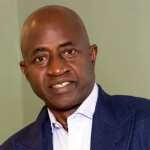



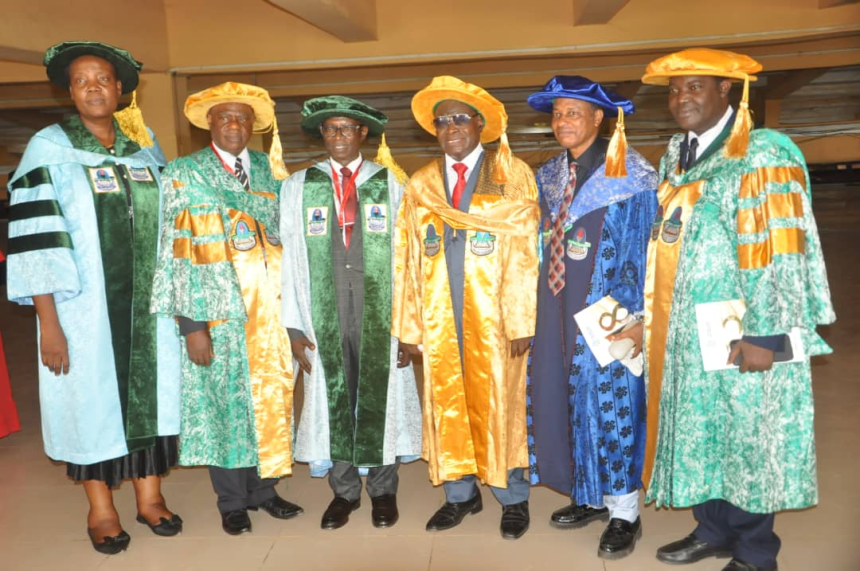
Dr Alban Igwe, Director-General of the Dangerous Goods Academy, Nigeria, has urged Nigerian universities to make research more practical by developing solutions to local problems that can attract funding and investment.
- Advertisement -

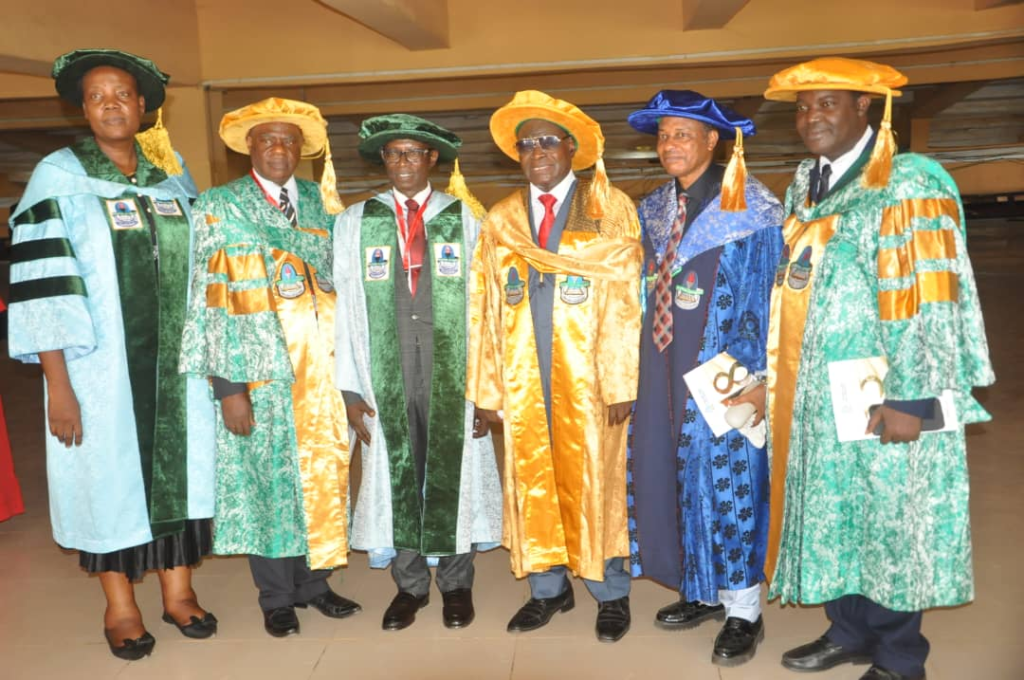
Igwe made the call while delivering the 18th Convocation Lecture of Crawford University, Igbesa, Ogun State, where he challenged tertiary institutions to move away from conventional academic practices that prioritise theoretical research over practical innovation.
Speaking on the theme, “The Future of Crawford University: Globalising the Locals and Globalising the Global”, he said universities must become centres of innovation that identify challenges within their communities and develop solutions with economic value.
He proposed a model in which students would be required to produce bankable project proposals addressing societal problems, with universities providing support to help turn successful ideas into viable ventures.
“I am looking for a university that is not copy and paste, and does not ask you to do the traditional thesis.
“The university should ask students to provide bankable proposals as projects and becomes guarantors to the students who deliver solutions to local problems.
“That’s the university of the future. Because we don’t need to go to Harvard to solve a local problem in Igbesa. There’s markets in Igbesa,” he said.
The infrastructure strategist, transport economist and maritime lawyer said Nigerian universities must look inwards, explore indigenous resources and reduce dependence on imported solutions.
Using malaria as an example, he challenged researchers to investigate the disease within their communities and explore locally available medicinal resources that could contribute to developing affordable treatments.
- Advertisement -

Igwe also identified logistics and transportation as areas where Crawford University could establish a strong identity, given its location within the Lagos-Badagry-Cotonou industrial and commercial corridor.
He urged the institution to establish a centre for trade, logistics and supply-chain studies, noting that the surrounding industrial environment offered opportunities for research and practical learning.
He further proposed turning the Lagos-Kano-Jibiya (Lakaji) Corridor into a living laboratory where students could study trade movements, transportation challenges and cross-border economic activities.
According to him, students from different disciplines could work together to develop solutions to problems affecting commodity distribution, supply chains and international trade.
Igwe described logistics as a major factor in national competitiveness, citing Singapore’s ability to strengthen its food security through efficient logistics despite limited agricultural production capacity.
He said transportation was essential to the functioning of virtually every sector, including healthcare, agriculture, education, commerce and national security.
“Countries are competing by virtue of logistics only. If you want to grind any economy, just stop transport. Nobody goes anywhere.
“The Army doesn’t win war because of AK-47. They win war because of logistics,” he said.
He also proposed a Crawford-Lakaji Knowledge Corridor that would connect the university with industries, manufacturers, agricultural businesses, ports, technology companies and international markets.
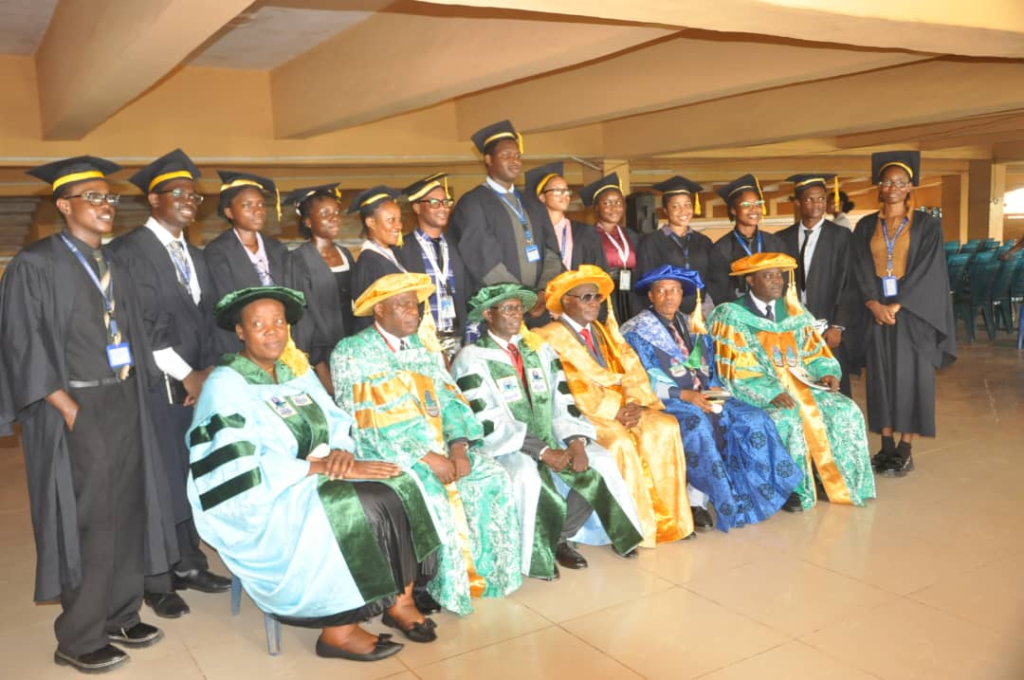
He said the initiative would enable industries to present practical challenges to the university, while students and researchers developed solutions that could be commercialised.
Igwe also advocated the use of technology to facilitate international academic collaborations, allowing Nigerian lecturers and students to exchange knowledge with foreign institutions without physical movement.
Earlier, the Vice-Chancellor of Crawford University, Prof Solomon Makinde, urged the graduands to become worthy ambassadors of the institution.
He said they had been equipped with academic knowledge, wisdom and godliness, expressing confidence that the graduating class, tagged Unicorn 18, would distinguish itself through excellence and responsible conduct.
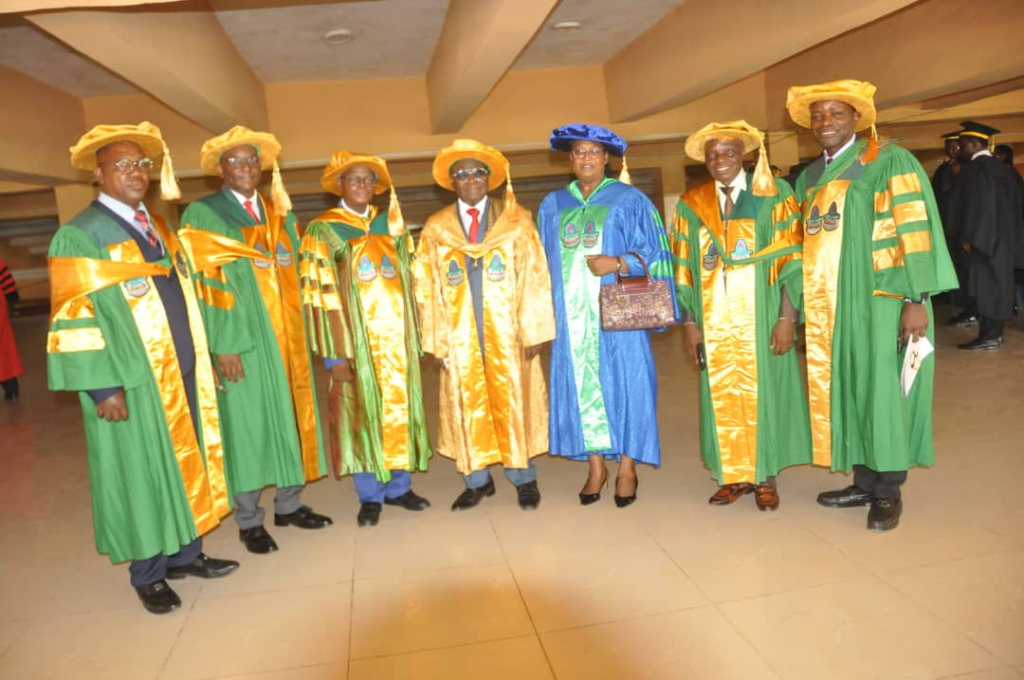
The university’s proprietor and District Superintendent of the Apostolic Faith Church, West and Central Africa, Rev. Isaac Adigun, also called for greater emphasis on moral values alongside academic training.
He said Crawford University had institutionalised Bible studies, prayer meetings and other faith-based activities to promote discipline, integrity and godliness among students.
The 18th Convocation produced 630 graduands, comprising 528 undergraduates and 102 postgraduate students, according to the News Agency of Nigeria.
Of the undergraduate graduands, 54 obtained First Class Honours, 233 graduated with Second Class Upper Division, 191 earned Second Class Lower Division, while 50 obtained Third Class Honours.
Ibazebo Anthony Eromonsele of Computer Science and Technology and Njoku Chiamaka Jasmine of Biochemistry emerged joint best graduating students in the regular undergraduate programme, each recording a CGPA of 4.92.
Uzoma Perpetua Ndidiamaka of Physics with Electronics emerged as the best graduating student in the School of Part-Time Studies, with a CGPA of 4.96.