


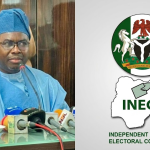







President Bola Tinubu has nominated Taiwo Oyedele as the Minister of State for Finance.
- Advertisement -

According to presidential spokesman, Bayo Onanuga, the former Chairman of the Presidential Committee on Fiscal Policy and Tax Reforms, will replace Doris Uzoka-Anite.
“President Tinubu has today conveyed the nomination of Oyedele to the Senate for confirmation in a letter to the Senate President, Godswill Akpabio,” Onanuga said in a statement on Tuesday.
Uzoka-Anite will now move to the Ministry of Budget and National Planning, as the Minister of State, her third portfolio in the administration, the presidential spokesman added.
In 2023, Tinubu appointed Oyedele, a fiscal policy partner and Africa tax leader at PriceWaterhouseCoopers (PwC), to chair the tax reforms committee.
The 50-year-old Oyedele is a public policy expert, an accountant, and an economist.
He attended Yaba College of Technology and bagged a Higher National Diploma (HND) in accountancy and finance.
Oyedele also earned a BSc in applied accounting from Oxford Brookes University.

His academic journey saw him study at the London School of Economics, Yale University, the Gordon Institute of Business Science, and the Harvard Kennedy School, where he completed executive education programmes.
- Advertisement -

The ministerial nominee worked for decades with PWC, having started his career at the organisation in 2001.
READ ALSO: Cabinet Reshuffling: President Tinubu Sacks Five Ministers, Create New Ministries
A professor at Babcock University in Ogun State, Oyedele, is also a visiting scholar at the Lagos Business School.
His appointment came months after Tinubu assented to the tax laws masterminded by Oyedele and his team.
The four bills: the Nigeria Tax Bill, the Nigeria Tax Administration Bill, the Nigeria Revenue Service (Establishment) Bill, and the Joint Revenue Board (Establishment) Bill were passed by the National Assembly last year after months of extensive debates and controversies.
On June 25, 2025, the ex-Lagos governor assented to the bills, which are targeted at significantly transforming tax administration in the country, leading to increased revenue generation, improved business environment, and a boost in domestic and foreign investments.