








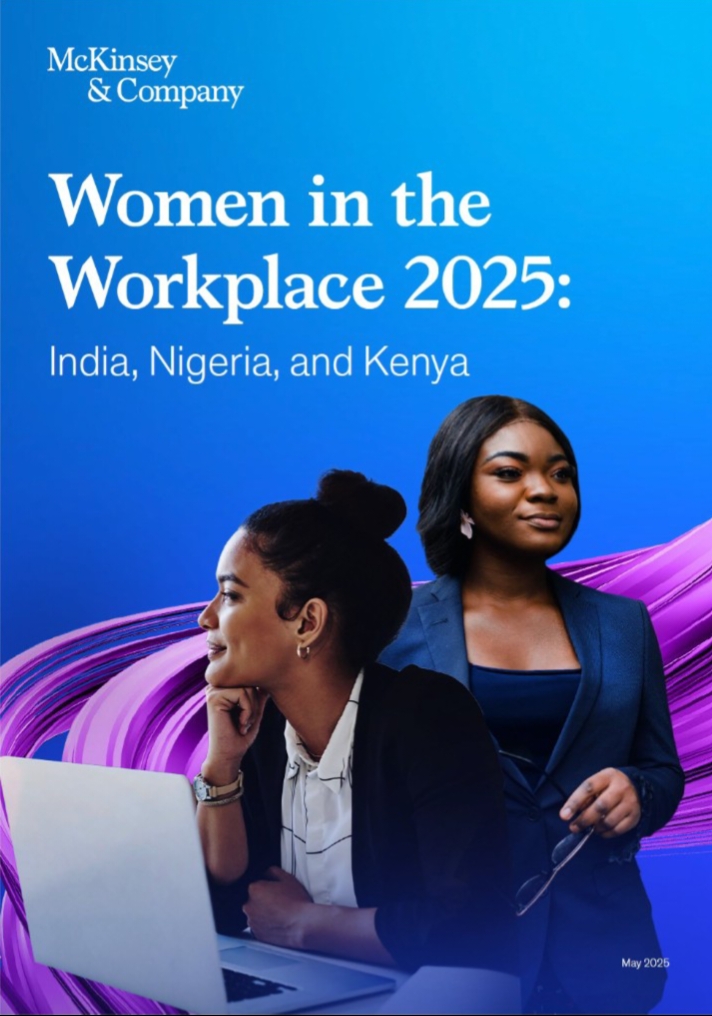
McKinsey & Company has released a landmark extension of its Women in the Workplace report, examining gender equity in the formal economies of Nigeria, Kenya, and India for the first time. Unveiled today at the Africa CEO Forum 2025 the continent’s largest private sector gathering—the report uncovers a persistent gender gap at the entry-level stage in Nigeria’s formal private sector.
- Advertisement -

Drawing insights from 324 organizations across the three countries, representing a workforce of 1.4 million people, the study finds that Nigerian women occupy just 33% of entry-level positions, marking the beginning of a steady but narrow pathway to leadership. Notably, women’s representation remains stable across higher rungs, with 29% of both managerial and C-suite roles held by women.>
“The data tells a clear story: Nigeria’s leadership gap is rooted in the entry-level barrier,” said Mayowa Kuyoro, Partner at McKinsey & Company and co-author of the report.
“Once women are in the system, they advance steadily but far too few make it through the door.”The report shows that women in Nigeria face a significant entry-level bottleneck despite broader participation in the workforce.
From manager to C-suite, however, women’s representation hovers between 28% and 29%, showing no sharp drop-offs once they enter the pipeline.
The data also indicates that senior women are more likely than men to be promoted—but also more likely to make lateral moves or exit altogether.
Across Nigeria, Kenya, and India, companies that perform better on gender equity tend to have certain policies in place.
Flexible work options are 34% more likely to be found in top-performing organizations, mentorship and sponsorship programs are 33% more common, and family and personal care policies are 23% more prevalent.
However, the report emphasizes that policy presence alone is insufficient. Implementation quality, leadership buy-in, and accountability mechanisms are key to translating policies into outcomes.
- Advertisement -

While 77% of companies say gender diversity is a CEO priority, only 66% track hiring and promotions by gender, and just 15% of corporate boards hold leadership accountable for gender equity results.
To drive real change, McKinsey recommends a focused three-step action plan for Nigerian employers: diagnose pipeline gaps by tracking gender-disaggregated data; design and implement evidence-based practices, especially around mentorship, flexibility, and care policies; and monitor progress by embedding accountability at the board and senior leadership levels.About McKinsey & CompanyMcKinsey is a global management consulting firm committed to helping organizations achieve sustainable and inclusive growth.
We partner with clients in the private, public, and social sectors to solve their most pressing challenges. Our work focuses on driving innovation, building resilient workforces, and delivering long-term performance improvements.Media Contacts:Aeri Neo – Aeri_Yeo@mckinsey.com / +65 8879 7190Sanam Dadhiala – Sanam.dadhiala@edelman.com—Let me know if you’d like this tailored further—for example, for a newspaper, internal distribution, or social media post.


